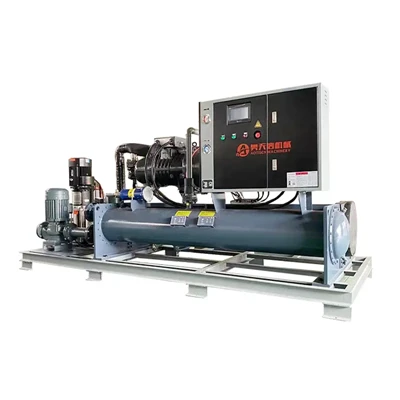
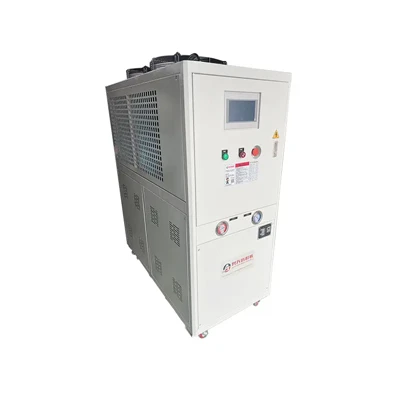
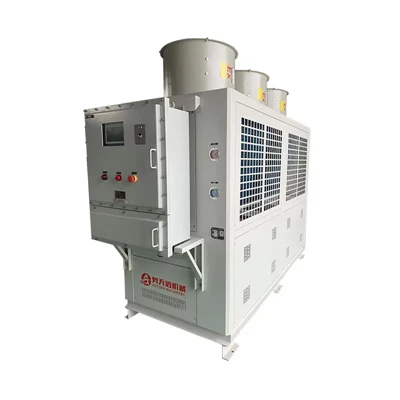
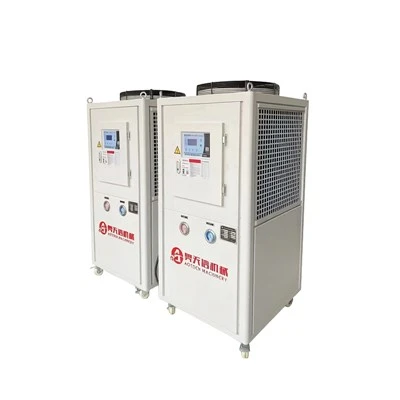
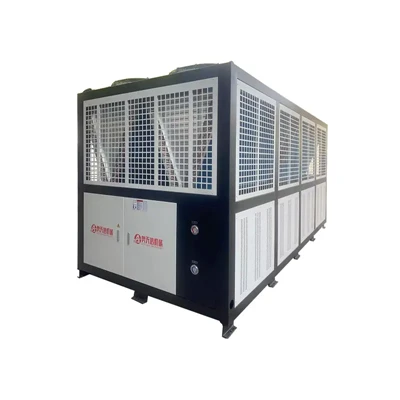
In the realm of industrial cooling systems, water screw chillers play a pivotal role in maintaining optimal temperatures for various applications. As a leading [We can't use a made - up company name, so we'll just say a leading] Water Screw Chiller supplier, I've witnessed firsthand the importance of each component within these complex machines. One such crucial component is the condenser. In this blog, we'll delve into the role of the condenser in a water screw chiller, exploring its functions, types, and significance in the overall operation of the system.
The Basics of a Water Screw Chiller
Before we discuss the condenser, let's briefly understand how a water screw chiller works. A Water Screw Chiller is a refrigeration system that uses a screw compressor to circulate a refrigerant through a closed - loop cycle. The primary purpose of the chiller is to remove heat from a process or space and transfer it to the environment.


The basic cycle of a water screw chiller consists of four main components: the evaporator, the compressor, the condenser, and the expansion valve. The evaporator absorbs heat from the process water, causing the refrigerant to evaporate. The compressor then compresses the low - pressure refrigerant vapor into a high - pressure vapor. The high - pressure vapor is then sent to the condenser, where it releases heat and condenses back into a liquid. Finally, the liquid refrigerant passes through the expansion valve, where its pressure is reduced, and the cycle begins again.
The Role of the Condenser
The condenser is a heat exchanger that plays a vital role in the water screw chiller system. Its main function is to remove heat from the high - pressure refrigerant vapor and convert it back into a liquid state. This process is essential for the efficient operation of the chiller, as it allows the refrigerant to release the heat it has absorbed from the process water.
Heat Transfer
The condenser achieves heat transfer through a process known as condensation. When the high - pressure refrigerant vapor enters the condenser, it comes into contact with a cooling medium, which is usually water or air. The cooling medium absorbs the heat from the refrigerant vapor, causing it to condense into a liquid.
In a water - cooled condenser, water is used as the cooling medium. The water flows through the condenser tubes, absorbing the heat from the refrigerant vapor on the outside of the tubes. The heated water is then discharged from the condenser and either sent to a cooling tower for further cooling or reused in the system.
In an air - cooled condenser, air is used as the cooling medium. The refrigerant vapor flows through a series of coils, and a fan blows air over the coils to remove the heat. The cooled air is then discharged into the atmosphere.
Pressure Regulation
In addition to heat transfer, the condenser also helps regulate the pressure within the refrigerant system. As the refrigerant vapor condenses into a liquid, its volume decreases, which in turn reduces the pressure. This pressure reduction is necessary for the proper functioning of the expansion valve, which requires a specific pressure difference to operate effectively.
Types of Condensers in Water Screw Chillers
There are two main types of condensers used in water screw chillers: water - cooled condensers and air - cooled condensers. Each type has its own advantages and disadvantages, and the choice between them depends on various factors such as the application, available space, and energy efficiency requirements.
Water - Cooled Condensers
Water - cooled condensers are commonly used in large - scale industrial applications where high cooling capacities are required. These condensers offer several advantages, including higher energy efficiency, smaller size, and better control over the condensing temperature.
One of the key benefits of water - cooled condensers is their ability to reject heat more effectively than air - cooled condensers. Water has a higher specific heat capacity than air, which means it can absorb more heat per unit volume. This allows water - cooled condensers to operate at lower condensing temperatures, resulting in higher energy efficiency.
Another advantage of water - cooled condensers is their smaller size. Since water is a more efficient heat transfer medium than air, water - cooled condensers can be designed to be more compact, making them suitable for applications where space is limited.
However, water - cooled condensers also have some drawbacks. They require a constant supply of water, which can be a challenge in areas with water shortages. Additionally, water - cooled condensers require a cooling tower to remove the heat from the water, which adds to the complexity and cost of the system.
Air - Cooled Condensers
Air - cooled condensers are often used in smaller - scale applications or where water is not readily available. These condensers offer several advantages, including simplicity, low maintenance, and no need for a water supply.
One of the main benefits of air - cooled condensers is their simplicity. They do not require a cooling tower or a water supply, which makes them easier to install and operate. Air - cooled condensers also have a lower maintenance requirement, as there are no water treatment issues to deal with.
However, air - cooled condensers also have some limitations. They are less energy - efficient than water - cooled condensers, as air has a lower specific heat capacity than water. This means that air - cooled condensers need to operate at higher condensing temperatures, which can result in higher energy consumption. Additionally, air - cooled condensers are larger in size than water - cooled condensers, as they require more surface area to transfer heat.
Significance of the Condenser in the Overall System
The condenser is a critical component of the water screw chiller system, and its performance directly affects the efficiency and reliability of the entire system. A well - designed and properly maintained condenser can help reduce energy consumption, lower operating costs, and extend the lifespan of the chiller.
Energy Efficiency
As mentioned earlier, the condenser plays a crucial role in the energy efficiency of the water screw chiller. By removing heat from the refrigerant vapor and condensing it back into a liquid, the condenser allows the chiller to operate at optimal conditions. A more efficient condenser can reduce the workload on the compressor, which in turn reduces energy consumption.
System Reliability
The condenser also contributes to the reliability of the water screw chiller system. A properly functioning condenser ensures that the refrigerant is in the correct state for the expansion valve to operate effectively. If the condenser fails to remove enough heat from the refrigerant vapor, the refrigerant may not condense properly, which can lead to problems such as high compressor discharge temperatures, reduced cooling capacity, and increased wear and tear on the compressor.
Maintenance and Longevity
Regular maintenance of the condenser is essential for ensuring its optimal performance and longevity. This includes cleaning the condenser coils, checking the refrigerant levels, and inspecting the water or air flow. By keeping the condenser in good condition, you can prevent costly breakdowns and extend the lifespan of the water screw chiller.
Conclusion
In conclusion, the condenser is a vital component of the water screw chiller system, playing a crucial role in heat transfer, pressure regulation, and overall system efficiency. Whether you choose a water - cooled or air - cooled condenser depends on your specific application, available resources, and energy efficiency requirements.
As a Water Screw Chiller supplier, we understand the importance of providing high - quality condensers that are designed to meet the unique needs of our customers. Our Water Cooled Screw Compressor and Industrial Screw Chillers are equipped with state - of - the - art condensers that offer superior performance and reliability.
If you're in the market for a water screw chiller or need to replace your existing condenser, we invite you to contact us for a consultation. Our team of experts can help you choose the right condenser for your application and provide you with the support and service you need to keep your chiller running smoothly.
References
- ASHRAE Handbook - Refrigeration. American Society of Heating, Refrigerating and Air - Conditioning Engineers.
- Refrigeration and Air Conditioning Technology. William C. Whitman, William M. Johnson, John A. Tomczyk, and Eugene Silberstein.