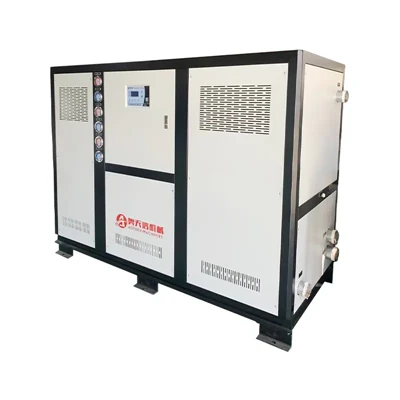
Hey there, folks! As a supplier of Water Screw Chillers, I get a ton of questions about the water treatment process for these bad boys. So, I thought I'd take a few minutes to break it down for y'all in a way that's easy to understand.
First off, let's talk about why water treatment is so important for water screw chillers. You see, water is the lifeblood of these machines. It's used to transfer heat from the refrigerant to the external environment. But if the water isn't treated properly, it can cause some serious problems.
One of the biggest issues is scale buildup. When water contains high levels of minerals like calcium and magnesium, these minerals can precipitate out of the water and form a hard, crusty layer on the surfaces of the chiller's heat exchangers and pipes. This scale acts as an insulator, reducing the efficiency of the heat transfer process and making the chiller work harder to achieve the same cooling effect. Over time, this can lead to increased energy consumption, higher operating costs, and even premature equipment failure.
Another problem is corrosion. Water that is too acidic or too alkaline can cause the metal components of the chiller to rust and corrode. This not only weakens the structure of the equipment but can also lead to leaks and other malfunctions. In addition, corrosion can release metal particles into the water, which can further clog the system and cause damage to pumps and other components.
Bacteria and algae growth is yet another concern. Water that is not properly treated can provide a breeding ground for microorganisms, which can form slime and biofilms on the surfaces of the chiller. These slime layers can reduce the efficiency of the heat transfer process, promote corrosion, and even pose a health risk if the water is used in applications where there is a potential for human contact.
So, now that we understand why water treatment is so important, let's take a look at the typical water treatment process for a water screw chiller.
Step 1: Pretreatment
The first step in the water treatment process is pretreatment. This involves removing any large particles, debris, and sediment from the water before it enters the chiller. Pretreatment can be achieved through a variety of methods, including filtration, sedimentation, and screening.
Filtration is one of the most common pretreatment methods. It involves passing the water through a filter media, such as sand, gravel, or activated carbon, to remove suspended solids and other impurities. Sedimentation is another method that involves allowing the water to sit in a tank or basin for a period of time, allowing the heavier particles to settle to the bottom. Screening is used to remove larger debris, such as leaves, twigs, and insects, from the water.
Step 2: Chemical Treatment
Once the water has been pretreated, the next step is chemical treatment. This involves adding chemicals to the water to control scale, corrosion, and bacteria growth.
Scale inhibitors are chemicals that are added to the water to prevent the formation of scale. These chemicals work by binding to the minerals in the water, preventing them from precipitating out and forming a hard layer on the surfaces of the chiller. Corrosion inhibitors are used to protect the metal components of the chiller from rust and corrosion. These chemicals work by forming a protective film on the metal surfaces, preventing the water from coming into contact with the metal and causing corrosion.
Biocides are chemicals that are added to the water to control bacteria and algae growth. These chemicals work by killing or inhibiting the growth of microorganisms in the water. There are a variety of biocides available, including chlorine, bromine, and ozone.
Step 3: Monitoring and Control
The final step in the water treatment process is monitoring and control. This involves regularly testing the water to ensure that the chemical levels are within the recommended range and that the water quality is meeting the requirements of the chiller.
Water testing can be done using a variety of methods, including chemical analysis, pH testing, and conductivity testing. Based on the test results, adjustments can be made to the chemical dosing rates to ensure that the water treatment system is operating effectively.
In addition to water testing, it's also important to monitor the performance of the chiller to ensure that it's operating efficiently. This can be done by monitoring the temperature, pressure, and flow rate of the water and refrigerant, as well as the energy consumption of the chiller.


So, there you have it, folks! That's the basic water treatment process for a water screw chiller. As you can see, proper water treatment is essential for ensuring the long-term performance and reliability of these machines.
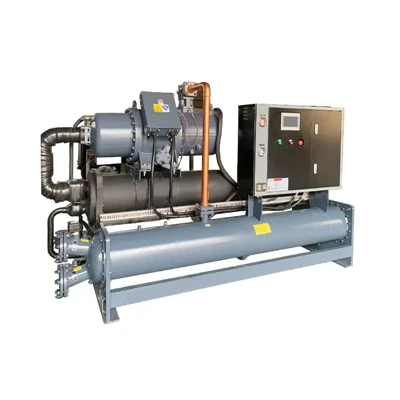
If you're in the market for a Water Screw Chiller or need help with your water treatment system, don't hesitate to reach out to us. We're a leading supplier of Industrial Screw Chillers, Water Cooled Screw Compressor, Screw Water Chiller, and Rotary Screw Chiller, and we have the expertise and experience to provide you with the best solutions for your cooling needs.
We offer a wide range of chillers and water treatment products, as well as professional installation, maintenance, and repair services. Our team of experts is always available to answer your questions and provide you with the support you need to keep your chiller running smoothly.
So, what are you waiting for? Contact us today to learn more about our products and services and to get a free quote. We look forward to helping you find the perfect cooling solution for your business!
References
- ASHRAE Handbook - HVAC Systems and Equipment. American Society of Heating, Refrigerating and Air-Conditioning Engineers.
- Cooling Tower Institute (CTI) Standards and Guidelines.
- Chiller Manufacturer's Operation and Maintenance Manuals.