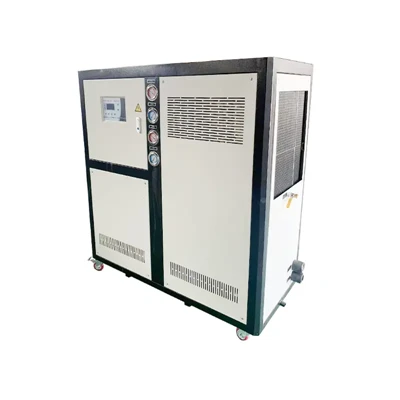
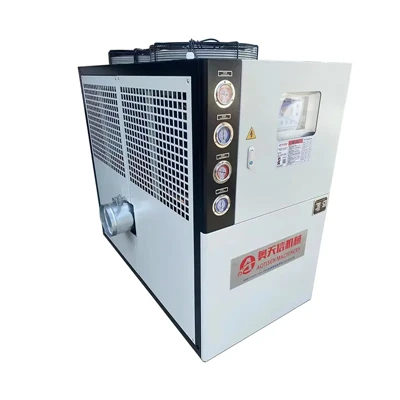
Hey there! I'm from a high precision chiller supplier, and today, I'm gonna walk you through how a high precision chiller works.
First off, let's get a bit of background. High precision chillers are super important in a bunch of industries. Whether it's in a high - tech lab where they need to keep the temperature of sensitive equipment just right, or in a manufacturing plant that produces delicate components, these chillers play a key role. They're designed to maintain a very stable and accurate temperature, often within a fraction of a degree.


So, how do they actually work? Well, at the heart of it, a high precision chiller operates on the basic principles of refrigeration. There are a few main components that you need to know about: the compressor, the condenser, the expansion valve, and the evaporator.
Let's start with the compressor. This little guy is like the engine of the chiller. It takes in low - pressure, low - temperature refrigerant vapor from the evaporator. The compressor then squeezes this vapor, increasing its pressure and temperature. This high - pressure, high - temperature vapor is then sent to the condenser.
The condenser is where the heat exchange starts to happen. As the hot refrigerant vapor enters the condenser, it comes into contact with a cooling medium. This could be air or water, depending on the type of condenser. In an air - cooled condenser, fans blow air over the coils that contain the refrigerant, cooling it down. In a water - cooled condenser, water circulates around the coils to absorb the heat. As the refrigerant cools, it changes from a vapor to a liquid. This process releases a whole lot of heat into the surrounding environment.
After the refrigerant has turned back into a liquid in the condenser, it moves on to the expansion valve. The expansion valve is like a bottleneck in the system. It restricts the flow of the liquid refrigerant, causing its pressure and temperature to drop suddenly. This low - pressure, low - temperature liquid refrigerant then enters the evaporator.
The evaporator is where the real magic happens for cooling. When the cold liquid refrigerant enters the evaporator, it comes into contact with the fluid (usually water or a water - glycol mixture) that needs to be cooled. Heat from the fluid is transferred to the refrigerant, causing the refrigerant to boil and turn back into a vapor. As this heat transfer occurs, the temperature of the fluid drops. The cooled fluid is then pumped back to the equipment that needs cooling, like a laser machine or a chemical reaction vessel. And the cycle starts all over again as the low - pressure refrigerant vapor is sucked back into the compressor.
Now, what makes a high precision chiller different from a regular chiller? Well, the key lies in the control system. High precision chillers have advanced sensors and controllers. These sensors constantly monitor the temperature of the fluid being cooled and the refrigerant at different points in the system. If the temperature starts to deviate from the set point, the controller can make very small adjustments to the operation of the compressor, the expansion valve, and other components. For example, if the temperature of the cooled fluid is rising a bit, the controller might increase the speed of the compressor to increase the cooling capacity.
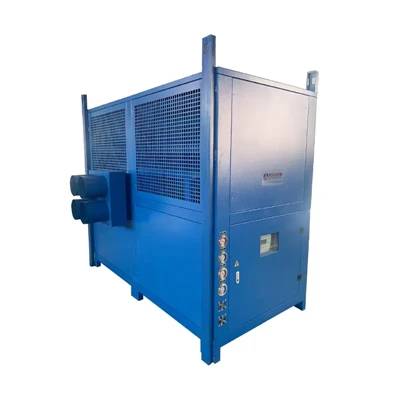
We also offer a range of related products on our website. For those who need lower temperatures, we have the Low Temp Chiller. This chiller is designed to reach and maintain extremely cold temperatures, which is perfect for applications like deep - freeze storage or in some specialized chemical processes.
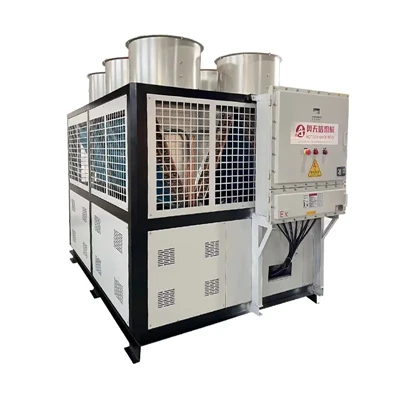
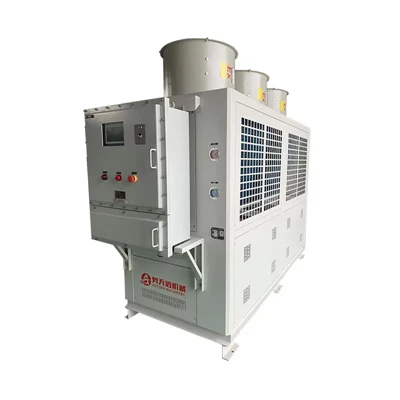
If you're working in an environment where there's a risk of explosion, check out our Explosion Proof Chiller and Explosion Resistant Cooling Chiller. These chillers are built with safety in mind, using special materials and designs to prevent any potential ignition sources.
Our EX Proof Industrial Chiller is another great option for industrial settings where explosion protection is a must. It combines high - performance cooling with top - notch safety features.
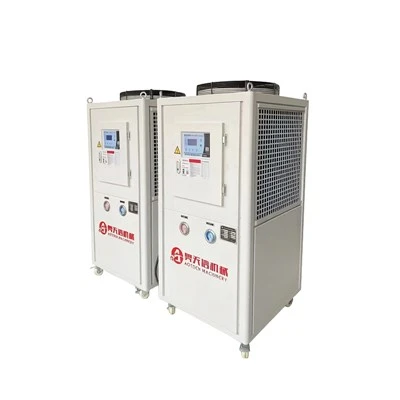
Of course, our star product is the High Precision Chiller. It's got all the latest technology to ensure that you get the most accurate and stable temperature control possible.
If you're in the market for a high precision chiller or any of our related products, we'd love to have a chat with you. Whether you're a small business just starting out or a large corporation, we can work with you to find the perfect chiller solution for your needs. Our team of experts is always on hand to answer any questions you might have and help you through the selection and purchasing process. Don't hesitate to reach out and start a conversation with us about your requirements.
In conclusion, a high precision chiller is a complex but amazing piece of equipment that can make a huge difference in industries that rely on precise temperature control. It's a combination of basic refrigeration principles and advanced control technology that allows it to do its job so well. Whether it's keeping a medical device at the right temperature or ensuring the quality of a manufacturing process, a high precision chiller is an essential tool.
References:
ASHRAE Handbook - Refrigeration. American Society of Heating, Refrigerating and Air - Conditioning Engineers.
Industrial Refrigeration Handbook. CRC Press.