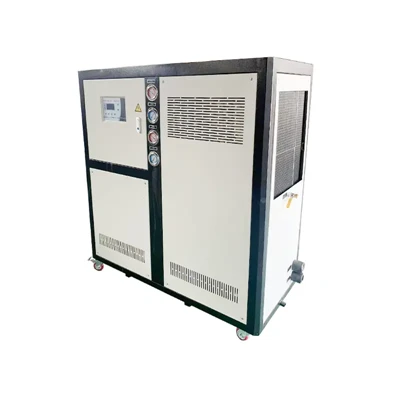
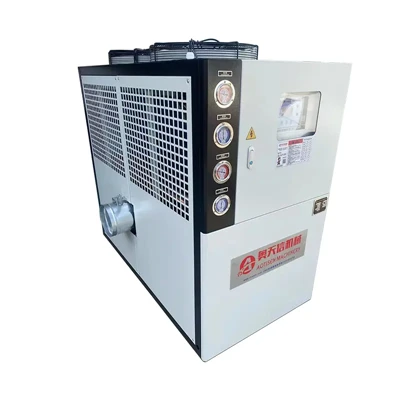
As a supplier specializing in Air Cooled Process Chillers, I often encounter a common question from our customers: Can an air cooled process chiller be connected to multiple cooling loads? This is a crucial query, especially for those looking to optimize their cooling systems and reduce costs. In this blog, I'll delve into the technical aspects, benefits, challenges, and practical considerations of connecting an air cooled process chiller to multiple cooling loads.
Technical Feasibility
Air cooled process chillers are designed to remove heat from a process or equipment. They work by using a refrigeration cycle, where a refrigerant absorbs heat from the process fluid, and then releases it into the ambient air through an air-cooled condenser. The basic principle allows for the possibility of connecting multiple cooling loads to a single chiller.
The key lies in the chiller's capacity. A chiller with sufficient cooling capacity can handle the combined heat load of multiple processes. For example, if each of two processes generates a heat load of 10 kW, a chiller with a capacity of at least 20 kW (plus a safety margin) can theoretically cool both processes simultaneously. However, it's not just about the total heat load. The flow rate and temperature requirements of each cooling load also need to be considered.
Benefits of Connecting Multiple Cooling Loads
Cost Savings
One of the most significant advantages is cost savings. Purchasing a single, larger-capacity chiller is often more economical than buying multiple smaller chillers for each individual cooling load. Additionally, there are savings in maintenance costs since there is only one unit to service and maintain.
Space Efficiency
Multiple cooling loads connected to a single chiller also save valuable floor space. Instead of having several chillers taking up space in different areas of a facility, a single unit can be placed in a central location, freeing up space for other operations.
Energy Efficiency
Modern air cooled process chillers are designed to operate efficiently at various load levels. When connected to multiple cooling loads, the chiller can be sized to match the overall load, allowing it to run closer to its optimal operating point. This can result in significant energy savings compared to running multiple smaller chillers, each with its own inefficiencies.

Challenges and Considerations
Balancing Loads
One of the main challenges is balancing the cooling loads. Each process may have different heat generation rates, flow requirements, and temperature setpoints. Without proper balancing, some loads may not receive sufficient cooling, while others may be overcooled. To address this, a well-designed distribution system with flow control valves and temperature sensors is essential.
System Complexity
Connecting multiple cooling loads to a single chiller increases the complexity of the overall system. There are more components, such as pipes, valves, and sensors, that need to be installed and maintained. This requires a higher level of technical expertise for installation, operation, and troubleshooting.
Backup and Redundancy
In a single-chiller, multiple-load system, if the chiller fails, all the connected cooling loads will be affected. To mitigate this risk, it's important to consider backup options, such as having a standby chiller or a redundant cooling system.
Practical Applications
Air cooled process chillers connected to multiple cooling loads are commonly used in various industries. For example, in the manufacturing sector, a single chiller can be used to cool multiple machine tools, such as CNC mills and lathes. In the food and beverage industry, a chiller can serve multiple cooling applications, such as refrigeration units, pasteurizers, and fermentation tanks.
Our Product Offerings
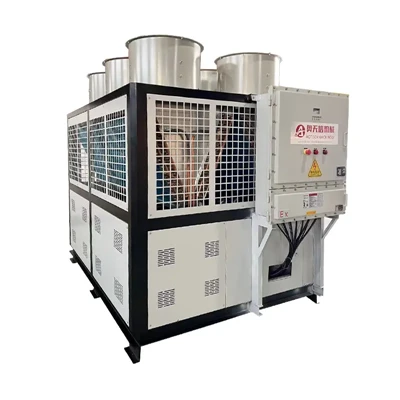
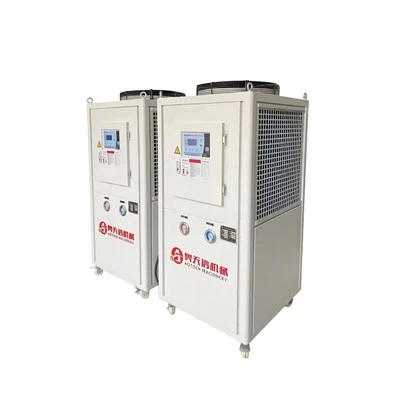
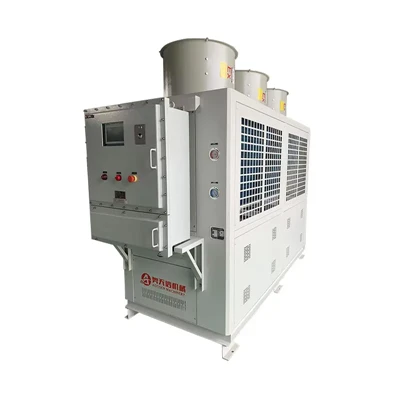
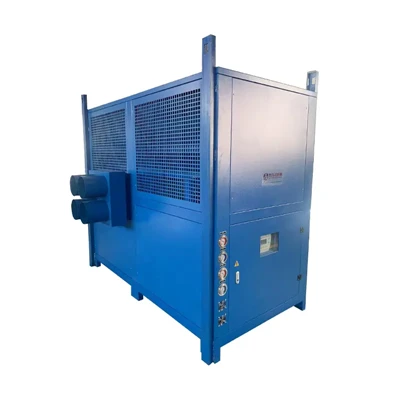
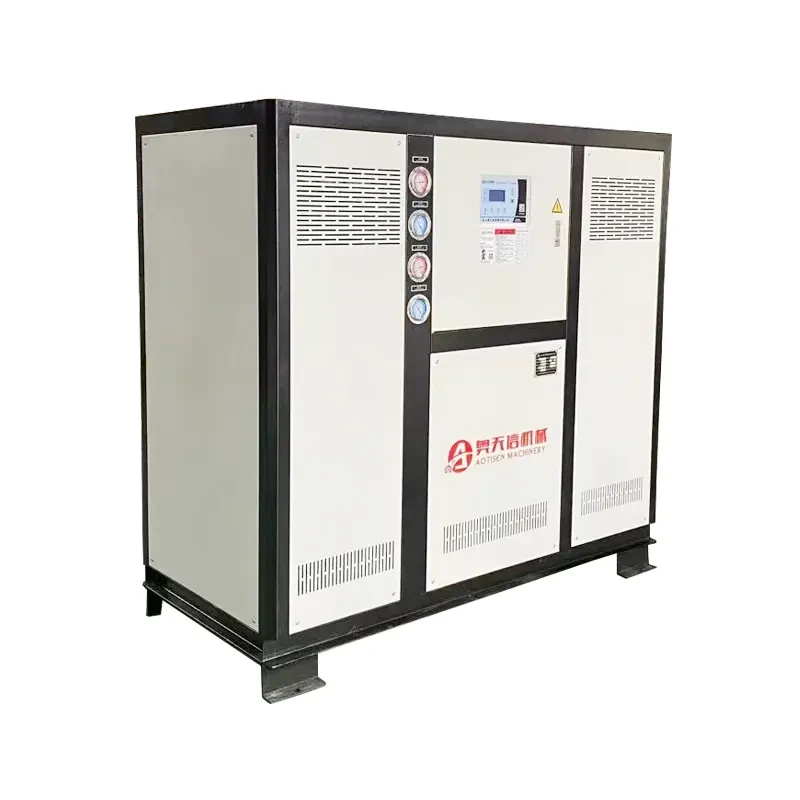
As a leading supplier of Air Cooled Process Chillers, we offer a wide range of products suitable for connecting to multiple cooling loads. Our Air Cooled Process Chiller is designed with advanced features for efficient operation and precise temperature control.
In addition to our standard process chillers, we also offer specialized units such as Air Cooled Oil Chiller for cooling oil in hydraulic systems and machinery, Low Temperature Water Chiller for applications requiring low-temperature cooling, and Air Cooled Industrial Oil Cooler for industrial oil cooling needs. We also have Water Chiller Cooler options for those who prefer water-based cooling systems.
Conclusion
In conclusion, an air cooled process chiller can indeed be connected to multiple cooling loads, offering cost savings, space efficiency, and energy efficiency. However, it requires careful planning, proper load balancing, and consideration of backup options. As a reliable supplier, we have the expertise and products to help you design and implement a cooling system that meets your specific needs. If you're interested in learning more about connecting multiple cooling loads to our air cooled process chillers or have any questions, we encourage you to reach out to us for a detailed consultation and to discuss your procurement options.
References
- Perry, R. H., & Green, D. W. (Eds.). (2007). Perry's Chemical Engineers' Handbook. McGraw-Hill.
- Howell, J. R., & Buckius, R. O. (1992). Fundamentals of Engineering Thermodynamics. McGraw-Hill.